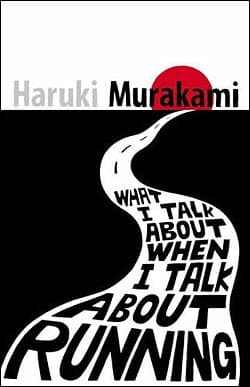
What I Talk About When I Talk About Running is a memoir by Haruki Murakami where he talks about two things that define a big part of his life: running and writing. Murakami didn’t always plan on being a novelist. He was running a jazz bar in his twenties when, while watching a baseball game, he suddenly thought, “I could write a novel.” He gave it a shot, it worked out, and he eventually sold his bar to focus on writing full-time. But sitting at a desk all day, smoking and not moving much, wasn’t doing his health any good. That’s when he picked up running.
For Murakami, running is more than just exercise—it’s part of his routine and, in a way, a metaphor for writing. Both take endurance. Both are long hauls where you push yourself day after day, even when you don’t feel like it. The book follows him as he trains for marathons, competes in triathlons, and grapples with the slow decline of his physical abilities as he ages. He talks a lot about acceptance—accepting getting older, accepting bad race times, and accepting that sometimes you just don’t do as well as you hoped. His attitude is basically: That’s life. You move on.
The writing style is straightforward, like he’s just talking to you over a coffee. He doesn’t dress things up. Sometimes he rambles, mentioning things like cycling habits or going off on tangents about global warming. At one point, he describes running the original marathon route in Greece—sun blazing, salt stinging his eyes, everything uncomfortable. But through it all, there’s this calm acceptance. He’s not trying to convince anyone to run; he just shares what it means to him.
By the end, what sticks isn’t just the running or the writing, but the way he embraces both the highs and the lows—the post-race blues, the joy of finishing, and the satisfaction of something as simple as a cold beer after a long run. It’s a book about effort, routine, and learning to keep going, no matter what.
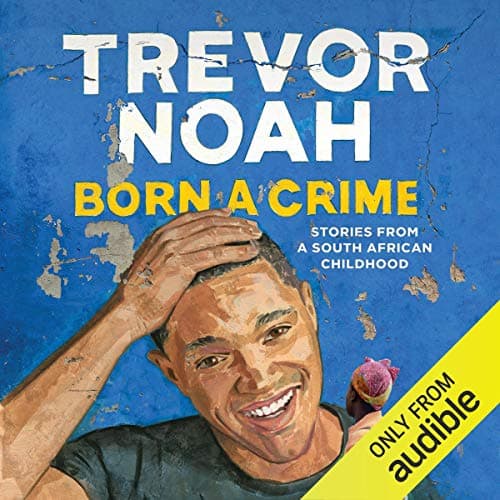
Born a Crime: Stories from a South African Childhood is Trevor Noah’s autobiography, published in 2016. It tells the story of his early years growing up in South Africa during and after apartheid. The title comes from the fact that his birth—he had a black Xhosa mother and a white Swiss-German father—was literally considered a crime under apartheid laws that banned interracial relationships at the time.
The book is a mix of humor and tough truths. Much of it focuses on Trevor’s relationship with his mother, Patricia, who plays a huge role in his life. She’s portrayed as tough, religious, and fiercely independent—someone who dragged him to multiple church services every week, even during times of violence and unrest. Her strong influence shapes his character, often through strict discipline and sharp lessons about right and wrong.
Trevor shares stories from his childhood that range from funny to intense. There’s a scene where his mother throws him out of a moving minibus to save him from a potentially dangerous driver. He also talks about using his talent for languages to navigate different cultural groups in South Africa, and how he hustled by selling bootleg CDs to make money. But not all his stories are light—he describes living with his abusive stepfather, Abel, whose violence culminated in him shooting Trevor’s mother, though she miraculously survived.
Despite the heavy topics—racism, poverty, domestic abuse—Noah’s storytelling is funny, honest, and full of warmth. The book gives a personal look at how apartheid shaped everyday life but also highlights the resilience of his family, especially his mother.
The memoir was widely praised, becoming a bestseller and earning spots on numerous “best of the year” lists. It struck a chord with readers around the world, and even inspired figures like U.S. Senator Tammy Duckworth and First Lady Jill Biden, who assigned it as reading for her English class.
A film adaptation is in the works, with Lupita Nyong’o set to play Trevor’s mother and co-produce the project.
I read this book when I first started running long distance. I was living in Chiang Mai and I'd go this huge park a couple of times a week and just run loops around the lake.
At the end of my run I'd grab a milk tea and a banana bread from a local coffee shop and just read a few pages.
Great memories of many chill evenings, running and reading about running.
I'm a sucker for audiobooks read by the author and this is one of them. Trevor Noah is a skilled comedian and his stories of his growing up in South Africa are genuinely hilarious. It's like listening to a book-length stand up show.
'Born a Crime' is a humorous memoir that showcases Trevor Noah's comedic storytelling and experiences growing up in South Africa, making it an entertaining listen, especially as it's narrated by the author himself. In contrast, 'What I Talk About When I Talk About Running' offers a reflective and motivational perspective on running and writing from Haruki Murakami, appealing to those who appreciate introspective narratives. The choice between the two depends on whether you prefer a comedic memoir or a thoughtful exploration of running and creativity.
'Born a Crime' is read by Trevor Noah himself, which adds a personal and engaging touch to the listening experience, making it feel like a stand-up comedy show. On the other hand, 'What I Talk About When I Talk About Running' is more of a reflective narrative that may not have the same level of engagement for listeners looking for humor. If you enjoy humor and storytelling, 'Born a Crime' may be the better choice, while those seeking motivation and introspection might prefer Murakami's work.
'What I Talk About When I Talk About Running' is specifically focused on motivation and the personal journey of running, making it a great choice for readers seeking inspiration. In contrast, while 'Born a Crime' is entertaining and insightful, it does not focus on motivation in the same way. Therefore, if motivation is your primary goal, Murakami's book would be more suitable.
'What I Talk About When I Talk About Running' is a memoir by Haruki Murakami that explores the intertwined themes of running and writing. Murakami shares his journey from running a jazz bar to becoming a novelist, detailing how running became a crucial part of his life and a metaphor for his writing process. The book reflects on endurance, acceptance of aging, and the highs and lows of both running and writing.
Pros of 'What I Talk About When I Talk About Running' include its easy readability, motivating content, and the peaceful tone of Murakami's writing. There are no cons listed for this book, indicating that readers generally find it to be a positive experience.
Haruki Murakami is a renowned Japanese author known for his unique blend of magical realism, surrealism, and themes of loneliness and existentialism. He gained international fame with novels such as 'Norwegian Wood' and 'Kafka on the Shore.' In 'What I Talk About When I Talk About Running,' he shares personal insights into his life as a writer and runner.
The writing style of 'What I Talk About When I Talk About Running' is straightforward and conversational, as if Murakami is sharing his thoughts over coffee. He often includes personal anecdotes and reflections, making the narrative relatable and engaging for readers.
In 'What I Talk About When I Talk About Running,' memorable moments include Murakami's experiences training for marathons, his reflections on aging and acceptance, and the simple joys of running, such as the satisfaction of finishing a race and enjoying a cold beer afterward. His vivid descriptions of running the original marathon route in Greece also stand out.
'Born a Crime: Stories from a South African Childhood' is Trevor Noah’s autobiography that recounts his early years growing up in South Africa during and after apartheid. The book explores themes of race, identity, and resilience, focusing on his relationship with his mother and the challenges they faced due to the apartheid laws that deemed his very existence a crime.
Trevor Noah is a South African comedian, television host, and political commentator, best known for hosting 'The Daily Show' on Comedy Central. He gained international fame for his insightful and humorous takes on current events, and his autobiography 'Born a Crime' has been widely praised for its storytelling and humor.
Pros of 'Born a Crime' include that it is read by Trevor Noah himself, making it an engaging audiobook experience. Many listeners find it funny and appreciate its easy listening quality. There are currently no cons listed for the book.
'Born a Crime' has an engaging and warm ambiance, as Trevor Noah uses humor to navigate serious topics. His storytelling style creates a relatable and entertaining atmosphere, making listeners feel as though they are part of his journey.
Readers have praised 'Born a Crime' for its humor and authenticity. Many enjoy listening to the audiobook version, especially since it is narrated by Trevor Noah himself, which adds a personal touch to the stories he shares about his childhood in South Africa.
Trevor Noah is a South African comedian, writer, producer, and television host, born on February 20, 1984, in Johannesburg. His upbringing was complicated by apartheid-era laws that made his parents’ interracial relationship illegal. His mother is Xhosa, and his father is Swiss-German. Growing up in Soweto, he experienced firsthand the complexities of race and identity in South Africa, something that would later shape much of his comedy.
He started his entertainment career in South Africa, first appearing on television in 2002. By his early twenties, he was hosting shows on national TV and performing stand-up comedy. His routines often focused on race, culture, and politics, blending sharp observations with personal stories.
In 2011, Noah moved to the United States. By 2014, he was a contributor on The Daily Show and took over as host from Jon Stewart in 2015. His style was more laid-back than Stewart’s, mixing global perspectives with humor rooted in his South African background. While some viewers appreciated his international take, others felt the show lost some of its bite. Still, he connected with younger audiences, especially on digital platforms.
Noah is also known for Born a Crime, his 2016 memoir about growing up in South Africa, which became a bestseller. Beyond The Daily Show, he’s hosted major events like the Grammy Awards several times and the White House Correspondents’ Dinner in 2022. After leaving The Daily Show in late 2022, he shifted focus to stand-up tours, podcasts, and other projects.
Offstage, Noah speaks several languages, supports Liverpool FC, and runs a foundation aimed at improving youth education in South Africa. Despite the humor in his work, much of his life—like surviving domestic violence in his family—has been marked by serious challenges, which he addresses with honesty and wit.
A Wild Sheep Chase by Haruki Murakami is a strange, offbeat novel that blends a detective story with surreal, dreamlike elements. It follows an unnamed, easygoing narrator who gets pulled into a bizarre search for a mysterious sheep with a star-shaped mark on its back. The story kicks off when a powerful figure in Japan’s underworld pressures the narrator into finding this sheep, which seems to hold some kind of mystical influence.
The book is set in late 1970s Japan, moving from urban Tokyo to the cold, isolated landscapes of Hokkaido. Along the way, the narrator is joined by his girlfriend, whose unusually perceptive ears give the story an added touch of the weird. They meet a cast of quirky characters—a shadowy secretary, a reclusive professor obsessed with sheep, and a man in a sheep costume who speaks in riddles.
What stands out is how ordinary things—bars, hotels, quiet towns—become strange and otherworldly. Murakami mixes humor, loneliness, and philosophical musings, all wrapped up in a plot that meanders like a road trip with no clear destination. The novel touches on themes like identity, power, and the search for meaning, but it never hits you over the head with them. Things just kind of unfold, sometimes making sense, sometimes not—and that seems to be the point.
It’s not a fast-paced thriller, nor is it a typical mystery. The journey is more about the odd encounters and the narrator’s inner reflections than solving a straightforward puzzle. If you’re into stories where reality feels slippery and the line between the ordinary and the surreal is blurred, this one might stick with you.