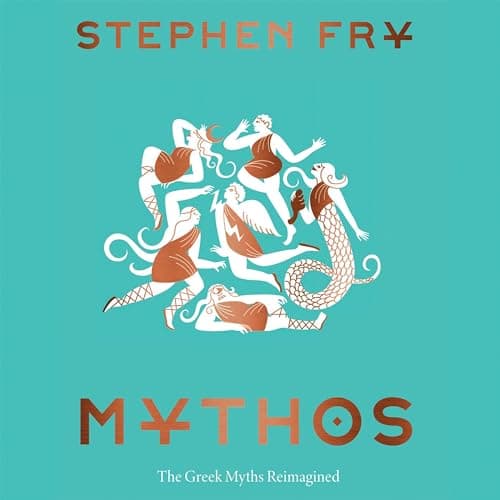
Greek myths retold by Stephen Fry. He is both the author and the narrator of this book. His wit and sense of humor come across in both the text and in the delivery.
Plus, you actually get to learn Greek myths.
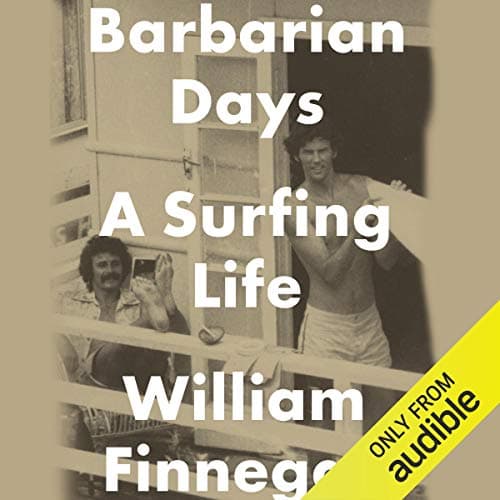
Barbarian Days: A Surfing Life is William Finnegan’s story about growing up obsessed with surfing. It’s not just about catching waves—it’s about a whole way of life that’s demanding, addictive, and sometimes dangerous. Finnegan started young, learning to surf in California and Hawaii, and kept chasing waves into adulthood, traveling through places like Fiji, Australia, Indonesia, and Africa. Along the way, he mixes adventure with self-reflection, talking about friendships formed in the water, the culture around surfing, and how it all fit with the times—especially during the social changes of the 1960s and '70s.
The book isn’t just about the thrill of surfing; Finnegan dives into the technical side of waves and the patience it takes to master them. He’s honest about his youthful recklessness—like taking LSD before surfing a massive wave in Maui—and the risks that came with his travels, from malaria scares to navigating shady markets. Still, surfing pulls him along, even when he’s juggling a career as a war reporter and later, family life.
At its core, Barbarian Days is an old-fashioned adventure tale mixed with a thoughtful look at what it means to be hooked on something so completely. Finnegan’s writing captures both the beauty and the grind of surfing, making you feel like you’re right there with him—whether on a remote beach or paddling out into icy waves off Long Island.
Mythos by Stephen Fry and Barbarian Days by William Finnegan cater to different audiences. Mythos retells Greek myths with Stephen Fry's wit and humor, making it both educational and entertaining. Barbarian Days, on the other hand, is a Pulitzer Prize-winning autobiography about surfing by William Finnegan. Both books are narrated by their respective authors, adding a personal touch to the narration. The choice depends on whether you're interested in Greek mythology or a deeply personal story about surfing.
Both Mythos by Stephen Fry and Barbarian Days by William Finnegan are narrated by their authors, which adds an engaging, personal touch to the storytelling. Stephen Fry's narration of Mythos is known for its wit and humor, making Greek myths accessible and entertaining. William Finnegan's narration of Barbarian Days provides an authentic and heartfelt recounting of his experiences in surfing. The engagement level will depend on your interest in the subject matter: Greek mythology or surfing.
'Mythos by Stephen Fry' is a retelling of Greek myths. Stephen Fry, who is both the author and the narrator, brings his signature wit and sense of humor to the stories. The book covers various Greek myths, providing an entertaining and educational experience.
Stephen Fry is a British comedian, actor, writer, and presenter. He is known for his sharp wit and intelligent humor. He has written several books and has narrated many audiobooks, including 'Mythos,' where he retells Greek myths with a unique and engaging style.
The main features of 'Mythos by Stephen Fry' include its engaging retelling of Greek myths, Stephen Fry's witty and humorous writing style, and his captivating narration in the audiobook version. The book offers both entertainment and educational value, making it a delightful read for those interested in mythology.
'Barbarian Days: A Surfing Life' is a memoir by William Finnegan that chronicles his lifelong obsession with surfing. The book explores not only the thrill of catching waves but also the culture surrounding surfing, the friendships formed in the water, and the personal reflections that come with a life dedicated to this demanding and sometimes dangerous sport. Finnegan shares his experiences from California and Hawaii to Fiji, Australia, Indonesia, and Africa, blending adventure with introspection.
'Barbarian Days' delves into several themes, including the passion and addiction associated with surfing, the risks involved in pursuing this lifestyle, and the impact of social changes during the 1960s and '70s. Finnegan reflects on his youthful recklessness, the technical aspects of surfing, and the balance between his career as a war reporter and his love for the ocean.
William Finnegan's writing in 'Barbarian Days' is characterized by vivid descriptions and a reflective tone. He captures both the beauty and the challenges of surfing, making readers feel as if they are experiencing the adventures alongside him. His narrative combines storytelling with insightful observations about life, friendship, and the allure of the ocean.
While there are no specific pros and cons listed for 'Barbarian Days', readers often appreciate its engaging storytelling and deep exploration of surfing culture. Some may find the technical aspects of surfing and the author's personal reflections to be less appealing if they are not interested in the sport. Overall, it is celebrated for its literary quality and the way it captures the essence of a life spent chasing waves.
What I Talk About When I Talk About Running is a memoir by Haruki Murakami where he talks about two things that define a big part of his life: running and writing. Murakami didn’t always plan on being a novelist. He was running a jazz bar in his twenties when, while watching a baseball game, he suddenly thought, “I could write a novel.” He gave it a shot, it worked out, and he eventually sold his bar to focus on writing full-time. But sitting at a desk all day, smoking and not moving much, wasn’t doing his health any good. That’s when he picked up running.
For Murakami, running is more than just exercise—it’s part of his routine and, in a way, a metaphor for writing. Both take endurance. Both are long hauls where you push yourself day after day, even when you don’t feel like it. The book follows him as he trains for marathons, competes in triathlons, and grapples with the slow decline of his physical abilities as he ages. He talks a lot about acceptance—accepting getting older, accepting bad race times, and accepting that sometimes you just don’t do as well as you hoped. His attitude is basically: That’s life. You move on.
The writing style is straightforward, like he’s just talking to you over a coffee. He doesn’t dress things up. Sometimes he rambles, mentioning things like cycling habits or going off on tangents about global warming. At one point, he describes running the original marathon route in Greece—sun blazing, salt stinging his eyes, everything uncomfortable. But through it all, there’s this calm acceptance. He’s not trying to convince anyone to run; he just shares what it means to him.
By the end, what sticks isn’t just the running or the writing, but the way he embraces both the highs and the lows—the post-race blues, the joy of finishing, and the satisfaction of something as simple as a cold beer after a long run. It’s a book about effort, routine, and learning to keep going, no matter what.
"Project Hail Mary" is a space adventure story written by Andy Weir, the same guy who wrote "The Martian." It's about a man named Ryland Grace who wakes up on a spaceship with no memory of who he is or why he's there. He figures out he's on a mission to save Earth from disaster. The story follows him as he tries to remember his past and complete his mission, which involves a lot of science and problem-solving. Along the way, he meets an alien, and they form an unlikely friendship. The book is full of cool science stuff, suspense, and humor. It's like a mix of a mystery and a space adventure, with a lot of heart.
The narration by Ray Porter is superb, with sound effects and excellent voice work.