Affordable, casual pizza place in the center of Gdynia. They serve pizza by the slice, breakfasts, pastas and cakes. It's dog-friendly, has good music, friendly atmosphere and a vaguely "street style" hip vibe.
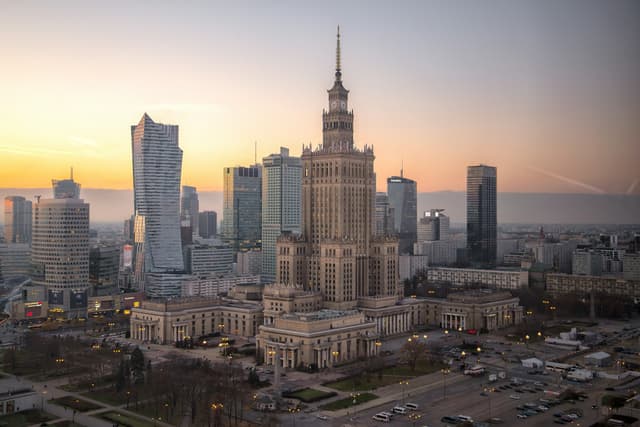
Warsaw is the capital of Poland, sitting on the Vistula River in the east-central part of the country. With nearly 1.9 million people in the city and over 3 million in the wider metropolitan area, it’s Poland’s biggest city. It’s a place where old and new collide—modern skyscrapers stand next to rebuilt historic districts, and its skyline is a mix of glass towers and ornate churches.
The Old Town, destroyed in World War II and painstakingly rebuilt, is now a UNESCO World Heritage Site. Walking through its cobblestone streets, you’ll find the Royal Castle and the colorful Market Square. Not far off is the Royal Route, a stretch of old palaces, churches, and the Presidential Palace, leading down to the grand Wilanów Palace and its gardens.
Despite the scars of war—most of the city was flattened during WWII—Warsaw bounced back fast. The post-war communist era left a mark with grey apartment blocks and the towering Palace of Culture and Science, a gift from the Soviet Union that’s still one of the tallest buildings in Poland. Now, Warsaw’s business district is full of sleek glass skyscrapers, including the Varso Tower, the tallest in the EU.
Green spaces are everywhere. Łazienki Park, home to peacocks and the Chopin monument, is a popular spot for Sunday strolls. The Vistula Riverbanks are packed with bars and cycling paths in summer. Even with its urban sprawl, about a quarter of the city is covered by parks and forests.
Warsaw’s history is complicated. It was once a cultural melting pot, with a large Jewish community before the Holocaust. The city remembers that past with places like the POLIN Museum and the remnants of the Warsaw Ghetto. It also honors its wartime resistance, especially the 1944 Warsaw Uprising, with monuments and the powerful Uprising Museum.
The city’s cultural life is rich. It hosts jazz festivals, classical concerts (especially anything Chopin-related), and has a buzzing nightlife. Food-wise, you’ll find everything from traditional Polish pierogi and hearty soups to modern vegan spots and Michelin-starred restaurants. There’s even a strong café culture, with old-school spots alongside trendy coffee bars.
Weather in Warsaw is typical for Central Europe—cold, snowy winters and warm, sometimes stormy, summers. Spring and autumn can be mild and pleasant, though the weather can change quickly.
In short, Warsaw is a city of contrasts. It’s got a tragic past but a vibrant present, blending historic charm with modern energy. Whether you’re wandering through its parks, exploring museums, or sipping coffee along the river, there’s plenty to take in.
Friendly towards foreigners. Affordable. Most people speak English. Safe.
Not great in the winter though. The weather is crap, you never get to see the sun, and air quality gets bad.
Still, summers in Warsaw are great, so I give it 4 stars.
Ogniem i Piecem offers a casual pizza experience with a focus on pizza by the slice, making it a great choice for quick, informal meals. In contrast, Warsaw, as a city, provides a diverse range of dining options, from traditional Polish cuisine to modern vegan spots, catering to various tastes and preferences. If you're looking for a specific casual pizza experience, Ogniem i Piecem is the better choice, while Warsaw offers a broader culinary landscape.
Both Ogniem i Piecem and Warsaw are noted for their affordability. Ogniem i Piecem serves pizza by the slice at reasonable prices, making it a budget-friendly option for casual dining. Warsaw, as a city, is also recognized for its affordable dining options, with a variety of eateries that cater to different budgets. Therefore, both options are affordable, but the choice may depend on the type of dining experience you seek.
Ogniem i Piecem is specifically noted for being dog-friendly, allowing patrons to enjoy their meals with their pets. In Warsaw, while many cafes and restaurants are becoming more accommodating to pets, the level of dog-friendliness can vary widely. If dining with a dog is a priority, Ogniem i Piecem is a clear choice, whereas in Warsaw, you may need to check individual establishments for their pet policies.
Ogniem i Piecem is described as having a friendly atmosphere with good music, making it a pleasant spot for casual socializing. Warsaw, being a vibrant city, offers a rich cultural life and numerous social venues, including bars and cafes that cater to various social scenes. If you're looking for a laid-back, casual vibe, Ogniem i Piecem is ideal, while Warsaw provides a broader range of social experiences.
Ogniem i Piecem in Gdynia offers a friendly atmosphere with a vaguely 'street style' hip vibe. The restaurant is known for being dog-friendly and playing good music, making it a pleasant place to hang out.
Ogniem i Piecem serves a variety of foods including pizza by the slice, breakfasts, pastas, and cakes. This makes it a versatile spot for different meals throughout the day.
Pros of Ogniem i Piecem include pizza by the slice, a dog-friendly environment, and good music. No cons have been listed by users at this time.
Ogniem i Piecem is located in the center of Gdynia, making it a convenient spot for both locals and visitors to enjoy a casual meal.
The pros of visiting Warsaw, Poland include its affordability, safety, and the fact that most people speak English, making it accessible for tourists. Additionally, the city is fun to explore with a mix of modern and historic attractions. However, a notable con is the lack of sunlight during the winter months, which can affect the overall experience.
Warsaw, the capital of Poland, has a complex history marked by destruction and resilience. Most of the city was flattened during World War II, but it was painstakingly rebuilt and is now a UNESCO World Heritage Site. The city remembers its past with museums like the POLIN Museum and monuments commemorating the Warsaw Uprising.
In Warsaw, you can explore the Old Town, visit the Royal Castle, and stroll through Łazienki Park. The city also offers a vibrant cultural scene with jazz festivals, classical concerts, and a buzzing nightlife. Food enthusiasts can enjoy traditional Polish dishes as well as modern cuisine in various restaurants and cafes.
Warsaw experiences typical Central European weather, with cold, snowy winters and warm, sometimes stormy summers. Spring and autumn can be mild and pleasant, but the weather can change quickly, so it's advisable to be prepared for varying conditions.
Yes, Warsaw is considered safe for tourists. The city has a low crime rate, and many visitors report feeling comfortable while exploring its streets and attractions. However, as with any major city, it's always wise to stay aware of your surroundings and take standard safety precautions.
Poland sits in Central Europe, stretching from the Baltic Sea in the north to mountains in the south. It shares borders with Germany to the west, Lithuania and Russia to the northeast, and several other countries along the east and south. Its landscape is a mix—flat plains in the center and north, and hilly or mountainous areas in the south. The coastline along the Baltic Sea is known for sandy beaches and coastal ridges. Inland, there are thousands of lakes, especially in the northeast, and big rivers like the Vistula and Oder cut across the land.
The weather is temperate. Summers are warm, winters moderately cold. Rain tends to fall more during the summer months, and winters are becoming drier over time.
Poland has deep roots in European history. It became a kingdom in 1025, later forming a powerful union with Lithuania. The Polish–Lithuanian Commonwealth was once one of Europe’s biggest states, with a unique political system. Poland's fortunes shifted in the late 18th century, when its neighbors carved it up, erasing it from maps for over a century. It re-emerged after World War I, only to be invaded at the start of World War II—a conflict that brought devastation and the horrors of the Holocaust. After the war, Poland fell under Soviet influence, but by 1989, it was the first Eastern Bloc country to shake off communism, thanks largely to the Solidarity movement.
Today, Poland is a democratic country with a population of over 38 million. Warsaw, the capital, is the largest city. Others like Kraków, Gdańsk, and Wrocław are known for historic centers and vibrant culture. The economy is strong, with Poland being one of the larger economies in the European Union.
Nature lovers come for places like the Tatra Mountains or the ancient Białowieża Forest, home to Europe’s largest land mammal—the European bison. There are 23 national parks, and over 17 sites are recognized as UNESCO World Heritage locations, from medieval town squares to the haunting Auschwitz-Birkenau memorial.
Culturally, Poland has a rich tradition of music, literature, and art. Composer Frédéric Chopin and novelist Joseph Conrad both came from here. More recently, Poland’s fantasy literature, like Andrzej Sapkowski’s The Witcher series, has found global fame. Polish cuisine is hearty, with dishes like pierogi (dumplings), bigos (a cabbage and meat stew), and żurek (sour rye soup). Vodka has its roots here, but beer and wine are also popular.
Sports are big in Poland—football (soccer) is a national passion, though volleyball and speedway racing attract large crowds too. The country also boasts top tennis players like Iga Świątek and mountaineers who’ve climbed the world’s highest peaks.
Despite its complicated past, Poland today balances its historical heritage with modern growth. Old town squares sit beside new buildings, and traditions are kept alive alongside a fast-developing economy and infrastructure.